Shri Harivansh, Deputy Chairman, Rajya Sabha Delivers Sir Syed Memorial Lecture at AMU
Highlights the Transformative Role of Technology in Social Change; Appreciates Government of India’s Efforts Towards Public Empowerment
WAQF TODAY
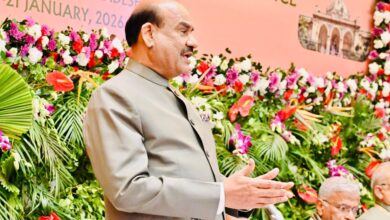
Aligarh, June 17: Shri Harivansh, Deputy Chairman of the Rajya Sabha, eminent journalist, and author, delivered the Sir Syed Memorial Lecture at Aligarh Muslim University, stating that technology has played a significant role in social transformation throughout human history. He noted that India is currently using technology very effectively for economic transformation and for empowering all sections of society, particularly the underprivileged and resource-poor. He said, “There is no doubt that the country faces various challenges due to its vast and diverse population and infrastructural limitations. However, while addressing these challenges, the government continues to move steadily towards empowering citizens and transforming India into a developed nation.”
Speaking on the topic “The Role of Technology in Social Transformation (Indian Perspective)” at the Conference Hall of the Administrative Block, Shri Harivansh referred to the founder of AMU, Sir Syed Ahmad Khan, and said that he faced numerous challenges and opposition in his mission to promote scientific temper and modern education for social and educational advancement. “He envisioned social reform and worked tirelessly to realize that dream. That is why he is counted among the builders of modern India,” he remarked.
Referring to Mahatma Gandhi and other reformers and thinkers, Shri Harivansh analysed the role of ideas in social transformation. Drawing upon the thoughts and theories of scholars and philosophers including Daniel Bell and Francis Fukuyama, he argued that contemporary technologies, including Artificial Intelligence (AI), are bringing about large-scale changes, and their positive potential can be harnessed to shape the present and future of nations.
In this context, he highlighted several Government of India initiatives such as the Digital India Mission, Direct Benefit Transfer (DBT), Agri-drone technology, the PM-KISAN scheme, UPI, and disaster alert systems. He said that the government has made technology inclusive, significantly increased electricity generation, and helped India become the world’s sixth-largest economy, with the benefits reaching ordinary citizens.
Recalling the challenges posed by the COVID-19 pandemic, Shri Harivansh noted that few had expected India to develop its own vaccine. However, the country’s scientists successfully achieved this feat and also supplied vaccines to other nations on humanitarian grounds. Similarly, he said, India demonstrated technological excellence by constructing a bridge over the Chenab River that is taller than the Eiffel Tower. He attributed these accomplishments to the dedication and expertise of Indian scientists and engineers.
Referring to the India AI Summit held in New Delhi earlier this year, the Rajya Sabha Deputy Chairman said that while some countries, including the United States, seek to limit the benefits of AI to themselves, India has undertaken the mission of making AI accessible to all. He emphasized the importance of self-reliance, stating that only confident people who adapt to modern technology and scientific innovation can build a better future.
Shri Harivansh further observed that India produces a large number of scientists and engineers every year. He stressed the need to focus national energies on self-reliance and to use technology collectively as a united nation for the country’s benefit, adding that this is the path toward becoming a strong nation.
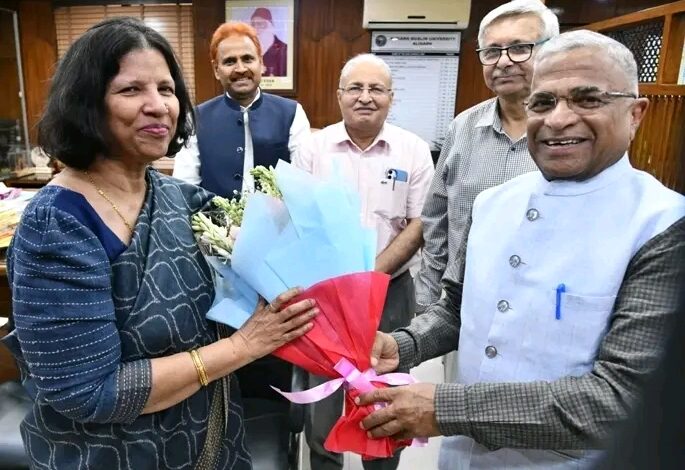
Presiding over the function, AMU Vice-Chancellor Prof. Naima Khatoon praised Shri Harivansh’s insightful address. She stated that technology has revolutionized every sphere, including education, healthcare, agriculture, socio-economic empowerment, and political economy. Despite its immense benefits, she cautioned that technology is a double-edged sword. It has also contributed to the spread of misinformation, online harassment, and polarisation, making responsible digital conduct essential. She added that the government’s extensive use of technology in governance and welfare programmes over recent years has significantly improved people’s lives and deserves appreciation. She thanked Shri Harivansh for visiting AMU to deliver the Sir Syed Memorial Lecture.
Welcoming the guest, Prof. Shafey Kidwai, Director, Sir Syed Academy introduced Shri Harivansh. He informed the audience that the Sir Syed Memorial Lecture has been organized by the Sir Syed Academy since 1968. Distinguished personalities such as Dr. Tara Chand, Shyam Benegal, Ramachandra Guha, Kuldip Nayar, Shamsur Rahman Faruqi, and M. J. Akbar have previously delivered the lecture. He noted that while Sir Syed Ahmad Khan is widely known as the founder of the Aligarh Movement and a social and educational reformer, fewer people are aware of his contributions to journalism and public life as a legislator. The memorial lecture, he said, aims to highlight the many dimensions of Sir Syed’s legacy.
AMU Pro Vice-Chancellor Prof. Mohammad Mohsin Khan presented a memento to Shri Harivansh. During the programme, two books were also released: Sir Syed Ahmad Khan: A Private Life (Oxford University Press), an English translation by Dr. Athar Farooqui of a work authored by Prof. Iftikhar Alam Khan, and Aligarh College aur Shiraz, written by Dr. Arshad Masood Hashmi. A panel discussion on Sir Syed Ahmad Khan: A Private Life will also be held in Sir Syed House on June 18, 2026 at 11:00 am.
AMU Registrar Prof. Aasim Zafar proposed a vote of thanks, while the proceedings were conducted by Dr. Syed Hussain Haider. A large number of faculty members, university officials, and students attended the event.
Following the Sir Syed Memorial Lecture, Shri Harivansh, accompanied by Vice-Chancellor Prof. Naima Khatoon and other university officials, planted a sapling of Terminalia Mantaly in the AMU Guest House premises under the ongoing “Ek Ped Maa Ke Naam” plantation campaign.
Shri Harivansh also visited the Sir Syed Academy, where he viewed the museum’s rare exhibits and artifacts and expressed his appreciation for the rich historical collection preserved there.
Public Relations Office